










If you enjoy puzzle games, you have likely played Rusty Lake. If you have already cleared all Rusty Lake titles and are digging deep into Reddit threads looking for an "alternative," you will find another puzzle game: Forgotten Hill. Today, let’s discuss the similarities and differences between these two series and why both are worth playing.
Visceral Fear vs. Lynchian Surrealism
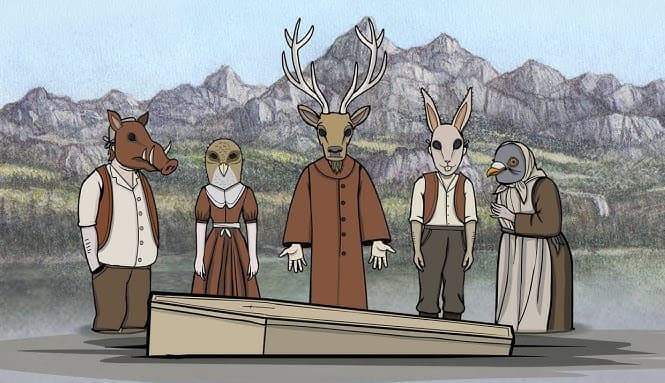
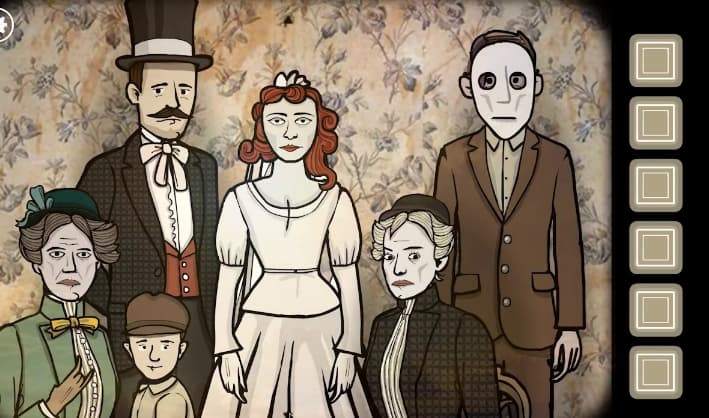
Rusty Lake’s style is akin to David Lynch’s films—not just horror, but a kind of "grotesque calm." The art style is clean, with moderate color saturation, often resembling the texture of chalk drawings. Even bloody scenes (such as throat-slitting or brain extraction) are often handled with a sense of ritual rather than pure disgust. What unsettles you is the collapse of logic. Human heads can be swapped for bird heads; shrimp can turn into giant creatures.
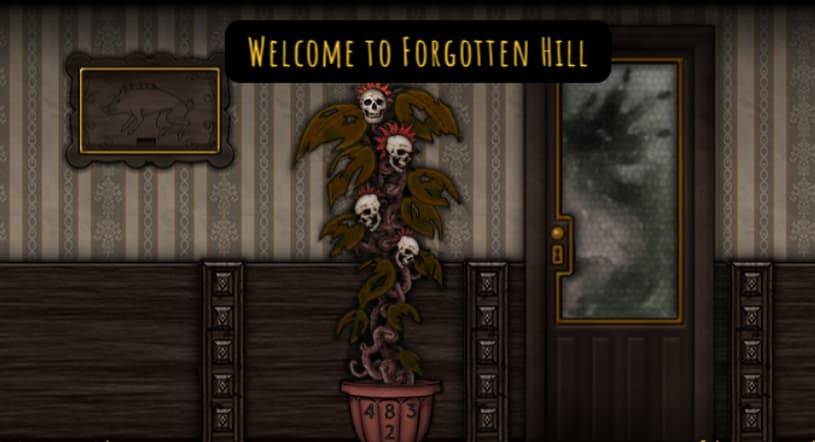
If Rusty Lake is an eerie dream, then Forgotten Hill is a sticky nightmare.
The overall tone is an oppressive sepia and dark green, filled with the scent of age and decay. The art style is more realistic and rough, making no secret of its obsession with Body Horror. Flayed skin, eyeballs, stitched limbs, and piles of spiders and fleshy monsters are everywhere. The horror here is physical, visceral, and even carries a strong sense of "pain."
Plot and Worldview
The story of Rusty Lake spans centuries, revolving around the Vanderboom and Eilander families. Rusty Lake is not just a location, but an "entity" that feeds on the area. It requires memories (existing as cubes: black for pain, white for calm, blue for time regression) to sustain life. It is an alchemy of sacrifice, reincarnation, and memory extraction.
The story of Forgotten Hill is more like an American Gothic horror film. In this fog-shrouded town, residents seem to be cursed or manipulated by evil spirits. It is full of mad puppeteers, twisted surgeons, and cannibalistic grandmothers. If you get lost in this town, it is best not to knock on anyone's door.
Madman's Rationality vs. Pure Madness
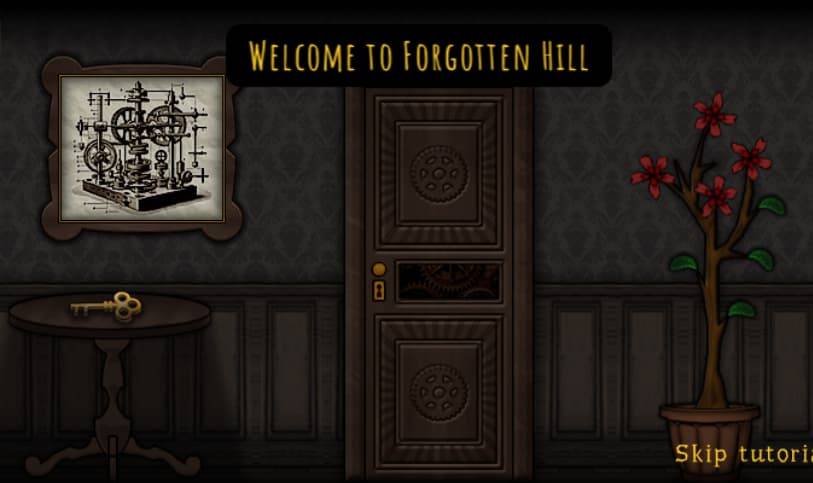
Although Rusty Lake has leaps in logic, it has a self-consistent set of internal rules. Once you accept settings like "feeding grass to a cow produces red wine," subsequent puzzles are usually traceable. Its room structure is the classic "Cube" rotation, with very tight interactions between the four walls.
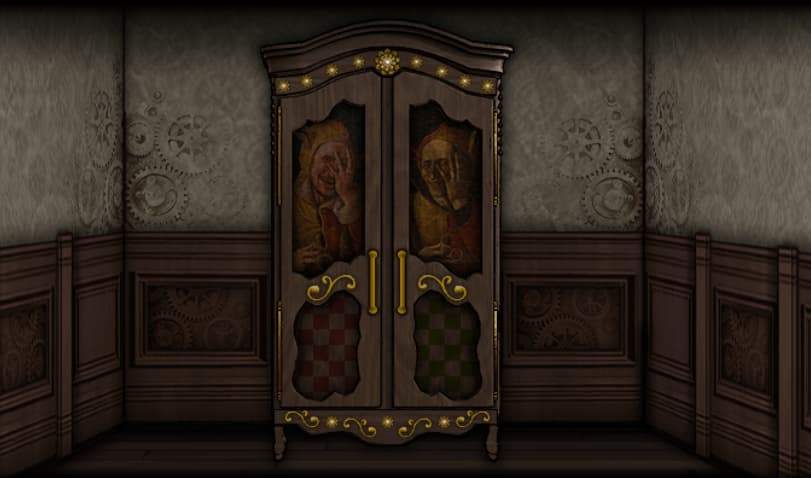
Forgotten Hill, due to scenes mostly being static screen switches, makes it easy to lose your sense of direction. Its puzzle difficulty is generally considered higher than Rusty Lake, sometimes referred to as "Moon Logic"—solutions are extremely obscure, sometimes even requiring a bit of luck or brute force. Compared to Rusty Lake, Forgotten Hill has more Jump Scares, creating greater psychological pressure while solving puzzles.
Forgotten Hill Beginner's Guide
If you decide to step into Forgotten Hill, it is recommended to play in the following order for the best story experience:
Forgotten Hill: Fall (The Cause: A strange night lost in the forest)
Forgotten Hill: Puppeteer (Expansion: About the puppet theater and the missing girlfriend)
Forgotten Hill: Surgery (Deep Dive: The horrific clinic and mutation experiments)
Forgotten Hill: Mementoes (Completion: Prequel-style memory fragments)
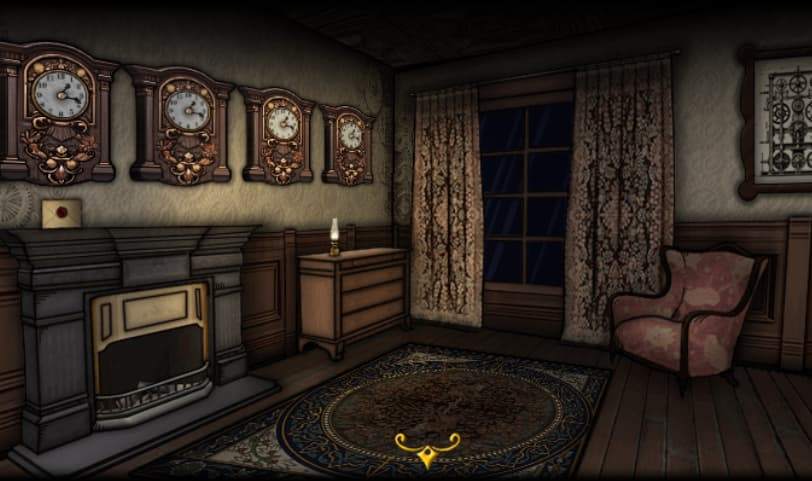
If you want art, symbolism, and psychological puzzles, Rusty Lake is king.
If you want tension, horror, and challenge, Forgotten Hill might actually be more suitable for you.
👉 Play Forgotten Hill: Puppeteer on NetGameX