













Author: Ryan Cooper
Chapter 1: Re-learning "How to Drive" — Controls
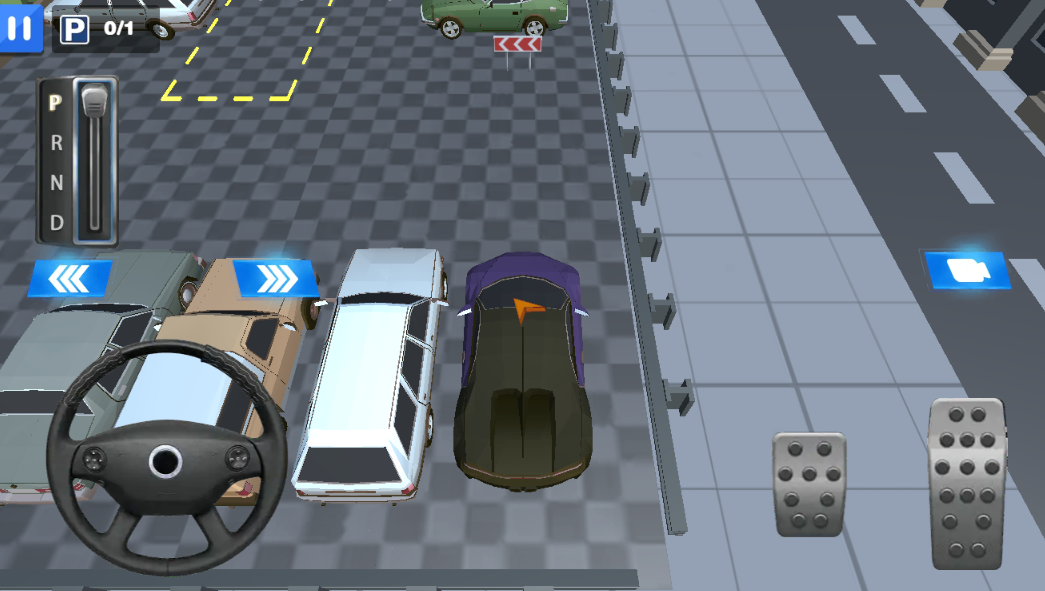
1. Realistic Gear Logic (PRND): Not Just Decoration
D (Drive): The car will only move forward if you are in D and press the gas. This sounds obvious, but during stressful multi-point turns, many people forget to shift back to D, slam the gas, and reverse straight into a wall.R (Reverse): Want to back up? You must come to a full stop,manually pull the lever to R, andthen press the gas. The game will not auto-shift for you!P (Park): Although the game mostly relies on position detection, shifting to P at the end of a level is a good habit to prevent the car from rolling on slopes, which can cause the level completion to fail.
2. The Art of the Virtual Steering Wheel
Return Delay: In real life, it takes time for the steering wheel to return to center. It's the same in the game. When navigating an S-curve or going around a pillar, if you wait until the car is straight before unwinding the wheel, it’s already too late. You need tocounter-steer early .Finesse: Don't always lock the wheel (turn it all the way). Sometimes you only need a gentle 30-degree turn to perfectly dodge a side obstacle. Learn to "feather" the steering, rather than just using "Full Lock" or "Dead Center."
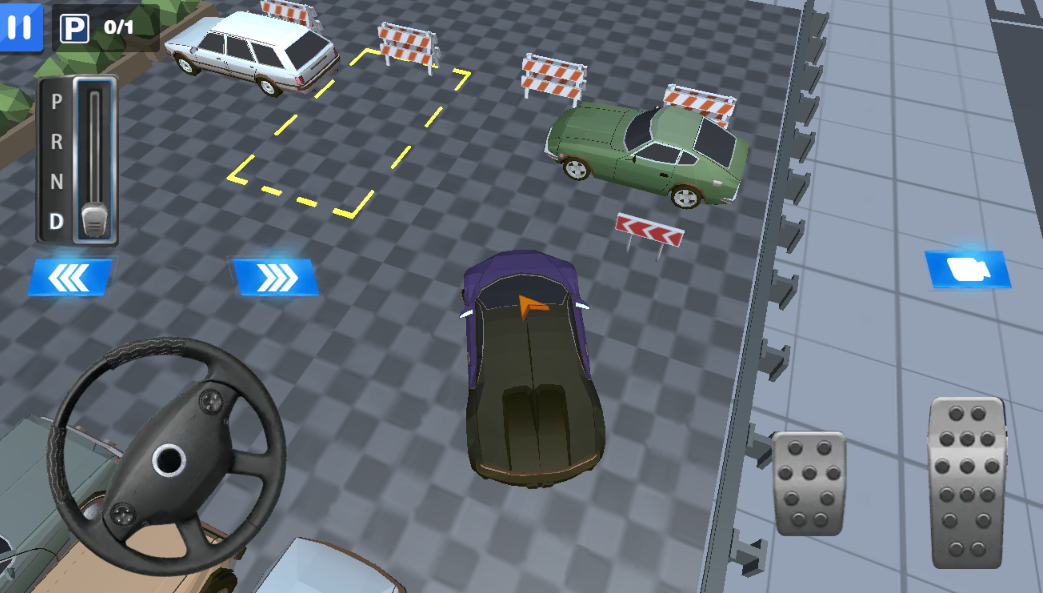
3. Pedal Control: Gas vs. Brake
The Tap-Tap Technique: Don't hold the brake down constantly. When approaching a parking spot, use a "Tap-Tap" method on the gas. Let the car creep forward inch by inch. This controls your speed and prevents you from accidentally stopping completely (frequent starting and stopping wastes time).
Chapter 2: Career Path — From Rookie to Tycoon
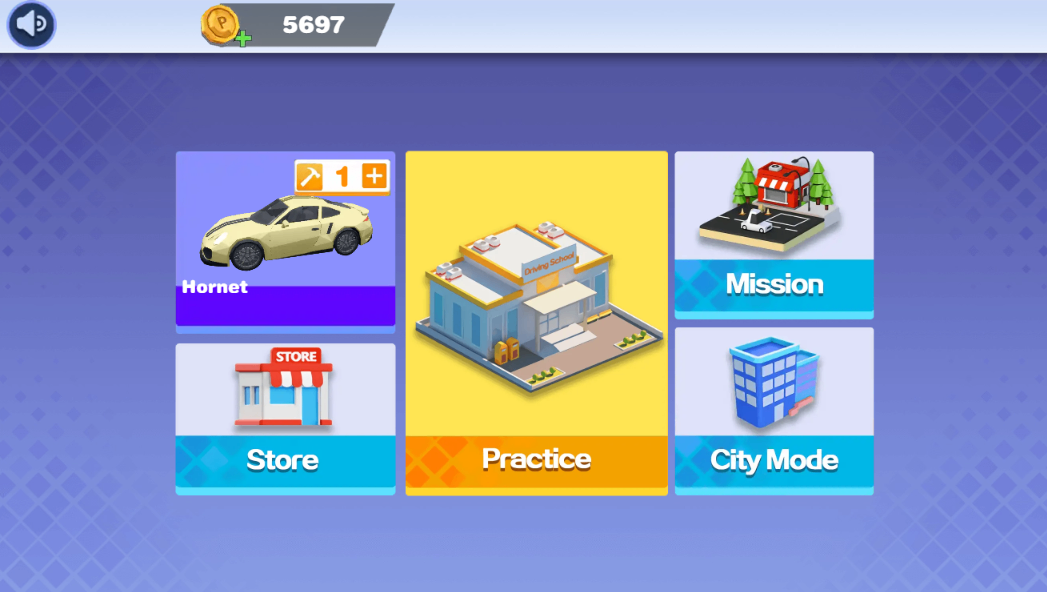
1. The Rookie's Rite of Passage: Practice (Driving School)
Break-in Period: Whenever you buy a new vehicle, the first thing to do isNOT to take on high-difficulty missions, but to come here and test drive.Testing Wheelbase: Every car has a different wheelbase and turning radius. Here, you can ignore the time limit and repeatedly test the "limit entry angle" of the car. For example, if you steer a long sedan the same way you steer a compact car, your rear wheels are guaranteed to clip the line.
2. The Money Maker: Mission Mode
The Arrow Rule: You must look at theOrange Arrow inside the parking space. It indicates the direction the car nose must face. If you pull off a sick reverse entry but the arrow points inward, you did it for nothing.Perfect Parking: It’s not enough to just get the car in; you have to park it straight. The more parallel your car is to the yellow dotted lines, the more stars and gold you get at settlement.
3. Free Roam: City Mode
Chapter 3: Practical Techniques — The "One-Shot" Entry
Technique 1: The Grid Method
Reference Points: Find a marker. For example, "When the tail of my car passes the edge of this black tile, lock the steering wheel to the right." Find this rhythm, and you become a parking robot—you won't even need parking sensors.
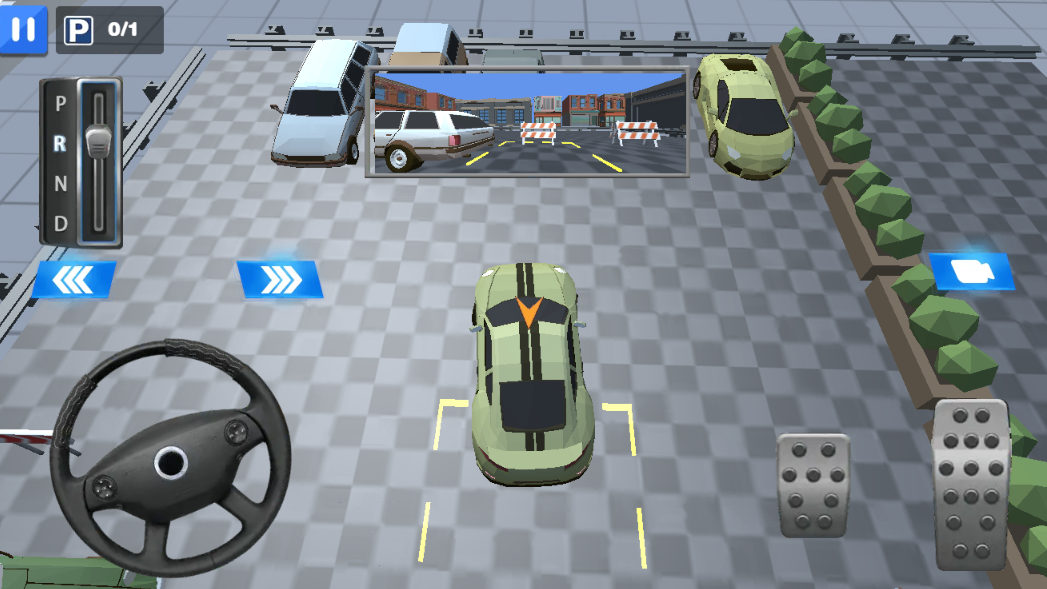
Technique 2: Camera Switching is a Cheat Code
Default Follow View (Third-Person): The camera is behind and above the car. Good for driving on open roads and seeing the car's overall stance, but prone to distance misjudgment when reversing in tight spots.Top-Down View (God View): Mandatory for Parking! Press the camera button to switch to a vertical overhead view. In this perspective, the gap between your car and surrounding obstacles is crystal clear. Many times you'll think you're about to crash, but switching to Top-Down view reveals you actually have half a meter of "safe space."
Technique 3: Head-in vs. Back-in
Parking at the end of an L-turn: Usually, it is recommended to drive theHead In directly, because you need to use the trailing ability of the rear wheels to adjust the tail.Side Parking (Parallel Parking): You mustBack In ! Pull the car up parallel to the car in front, shift to R, and lock the steering inward. Use the swing of the car's nose to "whip" the body into the space.
Chapter 4: Economy & Maintenance

1. Vehicle Upgrades & Selection
The Hornet Sports Car: I know you are all eyeing that yellow Hornet. It is indeed cool and fast, but be aware: sports cars usually have very long hoods. Since the game doesn't have a first-person view, you need to be extra cautious when judging the distance of the nose and leave more turning room than you would for a sedan.Starter Choice: Early on, I recommend using a short-wheelbase Compact Car (Hatchback) to farm 3-star ratings. The body is short, so it fits anywhere. It’s a money-making machine.
2. The Brutal Repair Mechanism
The Cost of Crashing: If you drive recklessly in missions, not only will you fail the mission, but your car will also get damaged. Repairs cost cold hard cash (Gold).Ryan’s Philosophy: I’d rather be one second slow and retry the level than rush and hit a wall. The repair bill might cost more than the gold you earn from passing the level! This game is actually teaching you to be a "steady" driver.
Ryan’s Final Mantra
Take a deep breath. Glance at the gear lever to confirm if you are in D or R. Feather the gas and use inertia to glide. Trust your instincts.