













Date: 2025
Hello, players! I'm back. This time, I’m recommending a strategy game focused on number growth and logic puzzles.
I. Core Gameplay: The Number War of "Big Fish Eats Little Fish"


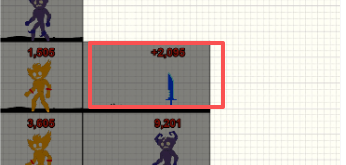
Victory: When your number > the enemy's number, you win, and your Combat Power increases (usually adding the enemy's value; some levels may have multiplication mechanics). Defeat: If you stubbornly charge at an enemy with a number higher than yours, the game ends immediately.
II. Advanced Strategy: Snowball Development
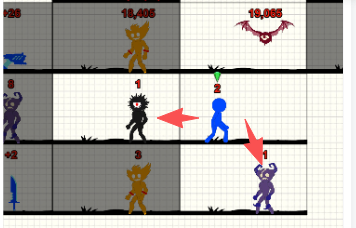

Look at the final Boss's number (e.g., 999). Calculate: Is the sum of your current power and all mobs on the field enough to reach 999? If not, there must be multiplication items or hidden weapons you haven't accounted for.
III. Special Mechanics and Trap Warnings
Debuff Traps: Some rooms may have "Subtraction" or "Division" mechanics (usually shown as red traps or Debuffs). Unless it is a mandatory path and you have calculated that your value is sufficient, try to avoid them! Hostage Rescue: Some rooms contain imprisoned teammates. Rescuing them usually gives you a large stat bonus directly, or is a necessary condition for clearing the level. Multi-Tower Teleportation: Later levels take place between two separate towers. At this time, use "Portals" or "Elevators." Even if the monsters over there look tempting, it's useless if you can't get there; solve the low-level monsters on this side first.
IV. Autumn’s Pitfall Guide
Don't be greedy: You see a chest and want to rush it, but a monster with "1 point" higher Combat Power is guarding the intersection. Rushing in at this moment is suicide. Losing by 1 point is still a loss! Visual Misdirection: Sometimes giant monsters don't necessarily have large numbers; small elite monsters might have terrifyingly high numbers. Look at the numbers, not the appearance! Watch the Math: There will be x2, x3 BUFFs in later stages. You must grab the multiplication BUFF when your value is at its highest to maximize the yield. For example, (10+5)*2 = 30 is definitely stronger than 10*2+5 = 25.