












Today, I’m setting aside complex spec sheets and performance charts. Instead, I want to talk to you as a veteran driver about the "physical feedback" and "driving aesthetics" that make this game so incredibly hooked.
After spending an hour in a relentless loop of "crash, restart, crash again, restart again," I have to admit: Pocket Car City is pure joy.
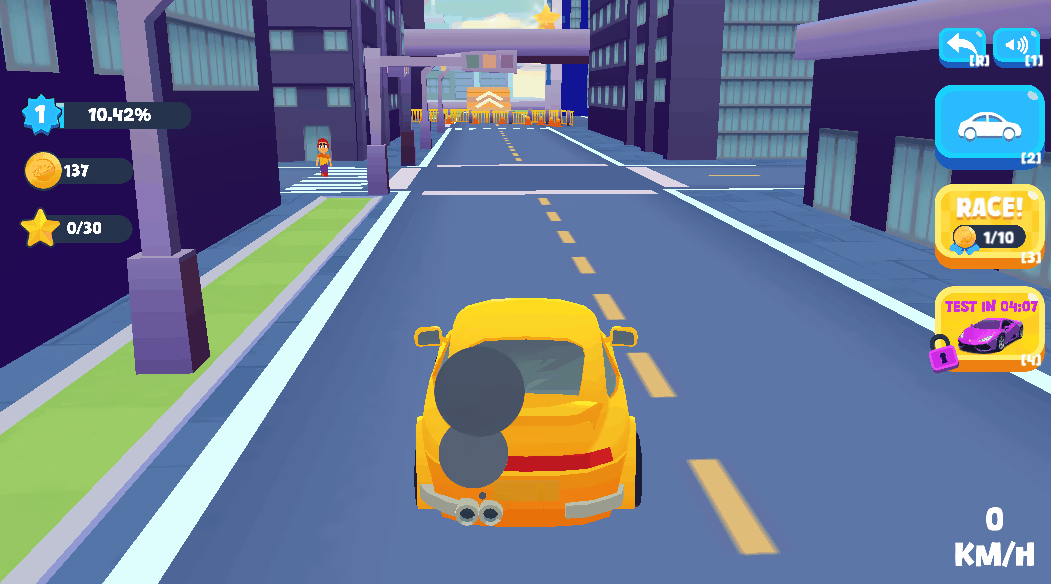
When most players evaluate a racing game, their first instinct is to check if the force feedback feels "real." For a top-down game like Pocket Car City—where you don’t even have a clutch—talking about "physics" might seem like overkill.
But it isn’t.
When weaving through traffic, you realize the developers have a wicked understanding of inertia. It’s not that stiff, robotic movement where the car instantly shifts when you tap a key; there’s a distinct "weight" to the body roll. Whenever I try to thread the needle through a tiny gap, I can feel a subtle delay between the nose and the tail of the car. That delay is exactly what seasoned players call "game feel."
My favorite challenge is "high-speed micro-adjustments." It feels like dancing ballet on ice—you have to apply just enough lateral force to move, while constantly worrying that the physics engine will lose its grip and sling you out of the safety zone. This pixel-perfect power struggle gives me a massive shot of ego every time I successfully dodge a semi-truck.
This is the core of a top-tier racing game: dancing on the edge of losing control while remaining the one in charge.
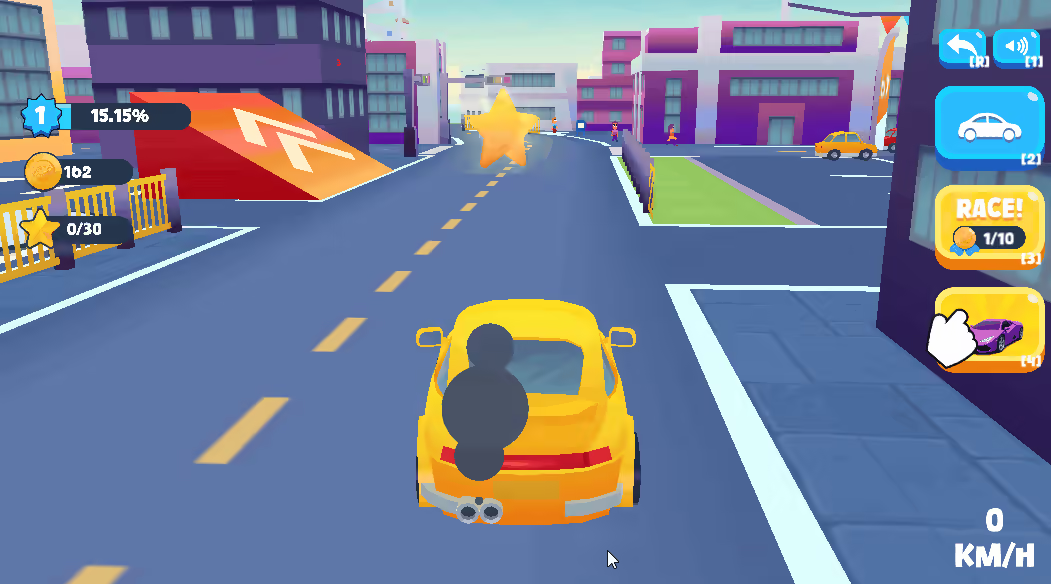
The aesthetics of Pocket Car City aren’t found in ray-tracing or shiny paint reflections; they reside in a "minimalist purity."
The visuals are as clean as an urban blueprint. The colors are bright, the lines are sharp, and there isn’t any UI clutter distracting you. This minimalism forces your entire focus onto one thing: judging distance.
To a player, the perfect driving line is a form of geometric beauty. When should you clip the apex? When should you floor it to grab that coin in the upper-left lane? Every split-second decision is a geometric calculation performed in the mind.
Even the "crash design" is fascinating. Usually, in racing games, a crash is a failure. Here, the post-impact physics offer a strange sense of catharsis. Watching my tiny car get bounced around like a pinball between AI vehicles after a mistake—amidst flying pixels and collapsing order—has a certain "Kubrick-esque" sense of violent beauty.
The "rush" of this game is multi-dimensional: the sense of order from precision handling, and the sense of chaos from a spectacular wreck. Together, they create a deeply addictive experience.
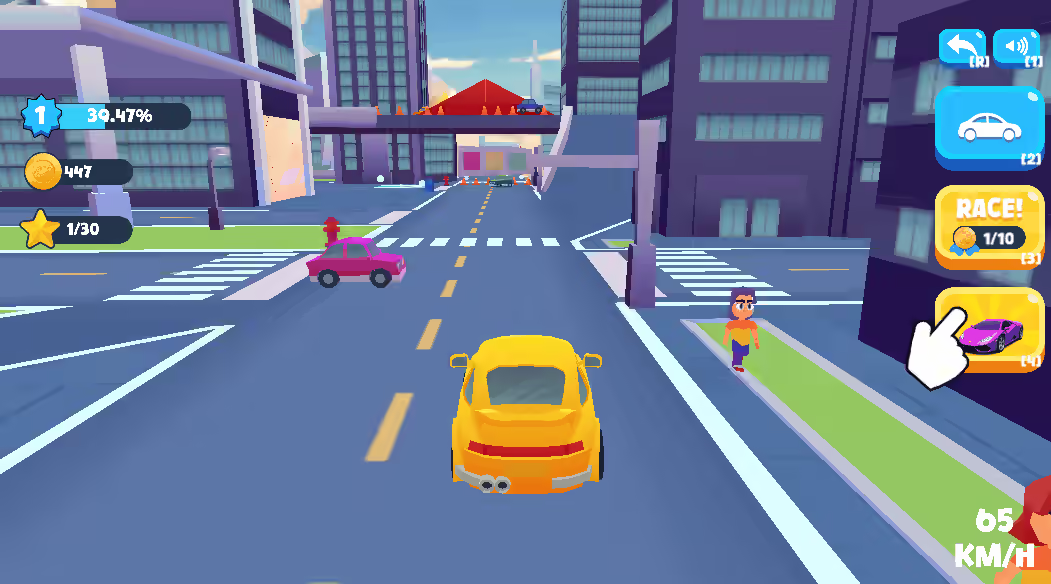
As an old pro who has played countless hardcore sims, I know that "staying steady" is the key to survival. However, those gold pixels scattered across the lanes are lures designed specifically for human greed. If you play it safe in the fast lane, you can go far. But the moment I see a coin tucked between two buses in the oncoming lane, my brain overrides logic: "Go for it, kid. You can make that gap."
Countless "miraculous" overtakes—and even more "disastrous" rear-end collisions—happen in that moment of greed. The resource layout constantly tests your psychological boundaries. Every cent you earn isn't a gift; it’s a trophy won by dancing on the edge of a scythe. That satisfaction beats the grind of a heavy MMO any day.
Pocket Car City provides that rare "flow state." It’s that feeling of deep focus where time disappears, and the world shrinks down to a single stretch of road and a car darting left and right.
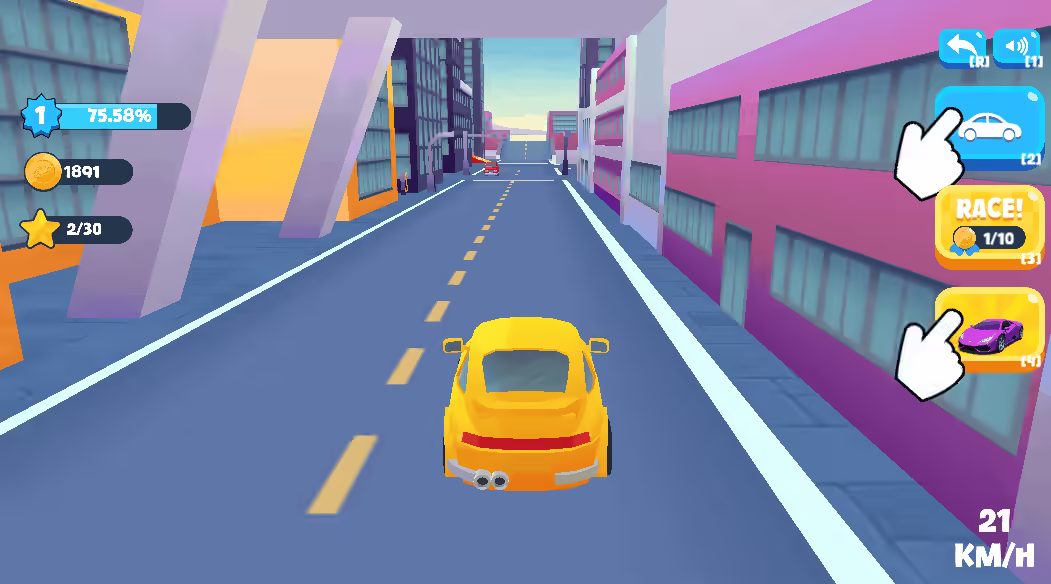
As a gaming blogger, I’ve reviewed many "stress-relief" games, but most are so simple they become boring. This game offers a low barrier to entry with a surprisingly high skill ceiling. You don’t need 40 hours to master the mechanics; you just need to be fully present for that one-minute run.
In a world of complex simulations, this kind of pure, concentrated fun is precious. Pocket Car City is a miniature utopia. It strips away the road rage, the exhaust fumes, the gas prices, and the traffic jams of real life, leaving behind only the heart of driving: speed, reflex, and a little bit of madness.
Start your journey into driving aesthetics: Pocket Car City – Play Now!